
Hamstring Strain Treatment Frankston
Aim to get back to the game you love with professional support after a hamstring injury.
Peninsula Physio & Rehab
Have You Sustained a Hamstring Strain?
A hamstring strain is one of the most common sports injuries. If you play sports that involve jumping, climbing, lunging, or sprinting, you may be at higher risk of injuring your hamstring. Whether you’ve injured your hamstring through sports or you don’t even know how it happened, our physiotherapists in Frankston want to help.
Hamstring injuries can impact your comfort and functionality, so it’s often beneficial to take steps to help them heal. We provide comprehensive care designed to help you get back on your feet and return to your favourite sports. For reliable hamstring strain treatment in Frankston, please contact us today.
Peninsula Physio & Rehab
What is a Hamstring Strain?
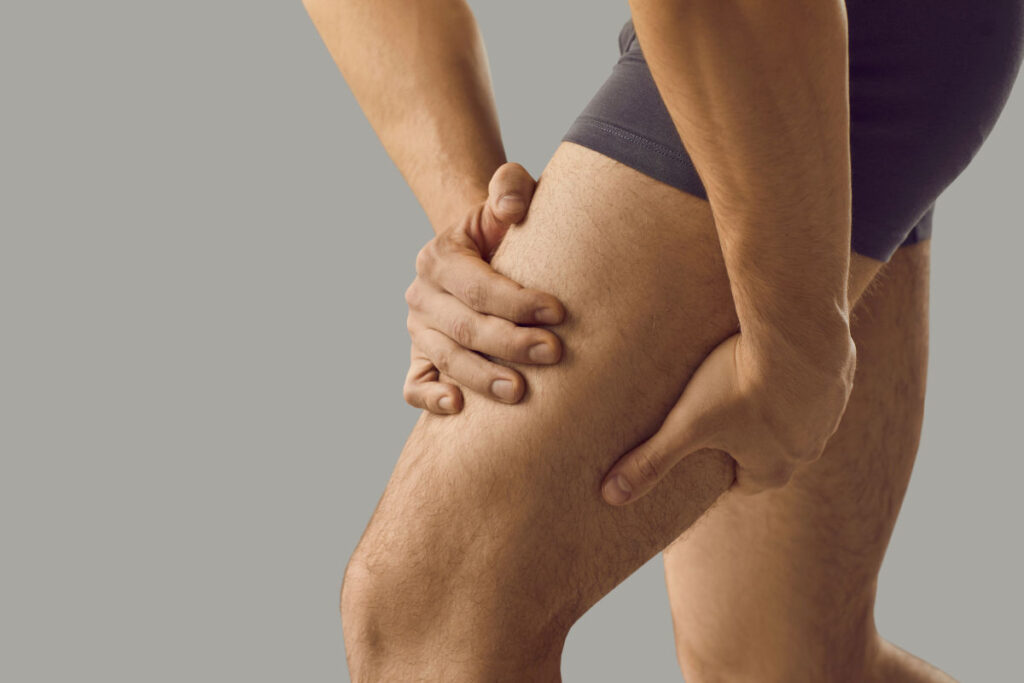
A hamstring strain is when one of the three muscles that run along the back of your thigh is pulled. Hamstrings are susceptible to injury because they cross over two major joints and take a lot of impact during fast movements and when your foot hits the ground.
This injury is more likely to occur during movements such as sudden stops and starts, which may be prevalent in games such as basketball, tennis, and football. Dancers and sprinters are also at a high risk.

Peninsula Physio & Rehab
Symptoms of a Hamstring Strain
Hamstring injuries can vary in severity and may affect one or more of the three hamstring muscles, which will affect the symptoms and outcome.
Some symptoms that may occur include:
- Mild, moderate, or severe pain in the back of the thigh and at the top of the leg, which may appear after activity or immediately after injury. Pain may radiate into the groin, buttocks, and/or lower leg
- Pain that appears when sitting, weight bearing, climbing stairs, and/or walking. Severe pain may impede walking completely
- Minimal, partial, or severe tearing or rupture of one or more muscles
- Varying degrees of weakness and/or stiffness
- Difficulty bending and/or straightening the knee
- Bruising
- Swelling
- Tenderness
- Muscle spasms
- A lump at the back of the thigh
Peninsula Physio & Rehab
Hamstring Strain Treatments
After a hamstring strain, it is important to rest, apply ice and bandage the area, and elevate the leg. This may minimise further damage, swelling, bruising, and bleeding.
Moderate to severe hamstring strains generally benefit from professional guidance and intervention. Physiotherapy has the potential to reduce pain and increase mobility, while also preparing you to safely return to physical activities. A physio may also help you to prevent hamstring strains in the first place or prevent reinjury.
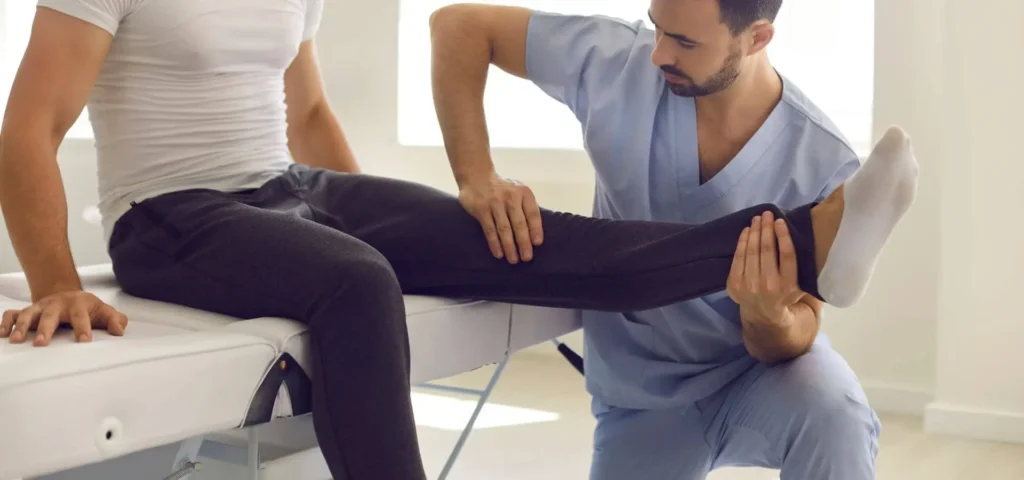
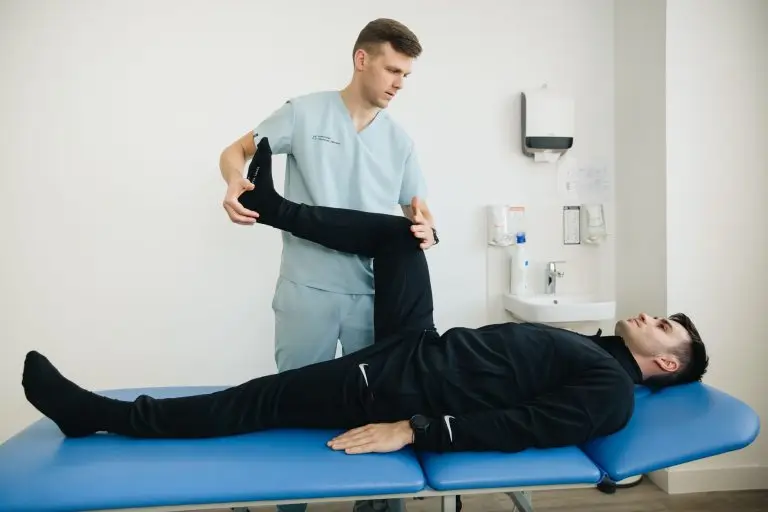
Our physios are highly experienced and will assess your injury and develop a tailored treatment plan. Depending on the severity of your injury, treatment may include:
- Manual therapy, such as mobilisation and massage, designed to increase muscle function and reduce discomfort
- Strengthening exercises that may improve the strength in the hamstring muscles and nearby muscles
- Stretching exercises that may reduce stiffness and improve flexibility
- Functional training, which includes exercises that are similar to day-to-day activities and sports to promote a safe return to physical activity

Peninsula Physio & Rehab
Frequently Asked Questions
What is the hamstring?
The hamstring refers to a group of three muscles that sit at the back of your thigh, allowing you to bend and straighten your leg at the knee and hip. These muscles are the semimembranosus, semitendinosus, and biceps femoris. They begin at the base of your pelvis and travel down your upper leg and attach to the tibia and fibula just below your knee joint.
What are risk factors for hamstring injuries?
Although hamstrings are susceptible to injury in general, there are factors that may increase your likelihood of experiencing a strain. These may include:
- Participating in sports or undertaking movement that involves swift changes in direction, sudden stops, and/or sprinting
- Tight muscles and reduced flexibility
- Minimal or lack of sufficient warming up before activity
- Overuse of the hamstring muscles
- Stronger muscles at the front of the thigh (the quadriceps) than the back of the thigh (the hamstrings), which causes the hamstrings to tire and weaken
- A sudden increase in the amount or level of activity or training
- Ageing
- Previous hamstring injury
How is a hamstring strain diagnosed?
Identifying a hamstring strain generally does not require imaging tests, though these may provide more information about the extent of the damage. Your physio will discuss your symptoms, when they began, and how they affect your movement and functionality.
They will then carry out a physical evaluation to assess your mobility and check for inflammation, tenderness, bruising, and lumps, as well as signs of other injuries, such as a broken bone.
Are there different types of hamstring strains?
Hamstring strains differ in severity depending on the extent of the damage sustained. Strains are categorised into the following three levels:
- Grade 1: Mild. This causes a radiating, sudden pain down the back of the thigh. There may be stiffness and reduced mobility, which may increase after resting.
- Grade 2: Moderate. This involves a partial tear in the muscle. The tear may result in moderate pain, weakness, bruising, and swelling.
- Grade 3: Severe. This is when there is a complete tear or rupture of the muscle. This results in severe pain down the back of the thigh and can radiate into the buttock. This may be accompanied by bruising, weakness, swelling, tenderness, and/or a limp. A popping sound may occur at the time of the injury.
Can I prevent a hamstring strain?
There are several steps to take that may reduce your risk of experiencing a hamstring strain. These include the following:
- Warm up before activity or sports for at least ten minutes, as well as carrying out appropriate stretches for the hamstrings, quadriceps, and hip flexors
- Cool down and stretch after activity and sports
- Increase your level of physical activity gradually
- Undertake strength training two to three times a week
How long does recovery from a hamstring strain take?
Recovery depends on the severity of your injury. Some very mild strains may improve within a few days, but most injuries take weeks or months to fully heal. Severe cases may take a year. A significant contributing factor to this is that it is basically impossible to completely rest the hamstring muscles. That is why professional guidance and treatment may be advantageous, as your physio can advise you on what may be the best course of action.
Peninsula Physio & Rehab
Why Choose Peninsula Physio & Rehab?
Our team in Frankston is experienced in providing high-quality, evidence-based assessments and therapy. We manage a range of conditions and injuries covering:
Personalised Care
Hamstring strains can present differently and require care tailored to your specific injury. Your physio will design a treatment plan that focuses on your needs and target outcomes.
Passionate Physios
We are dedicated to each of our patients and feel passionate about helping you to return to the sports you love after an injury, as well as preventing injuries.
Local Community
Our clinic is conveniently located to support the Frankston community, as well as surrounding areas in southeast Melbourne such as Seaford, Somerville, Langwarrin, Carrum Downs, Mount Eliza, and the wider Mornington Peninsula.
Rehab a Hamstring Strain with Comprehensive Physiotherapy
Hamstring strains can impact your quality of life significantly. Depending on the severity, they can be difficult to recover from. Tailored physiotherapy may support healing and help you to improve your movement and comfort.
If you are experiencing pain or reduced mobility in the back of your thigh, please contact us today to organise an appointment.